

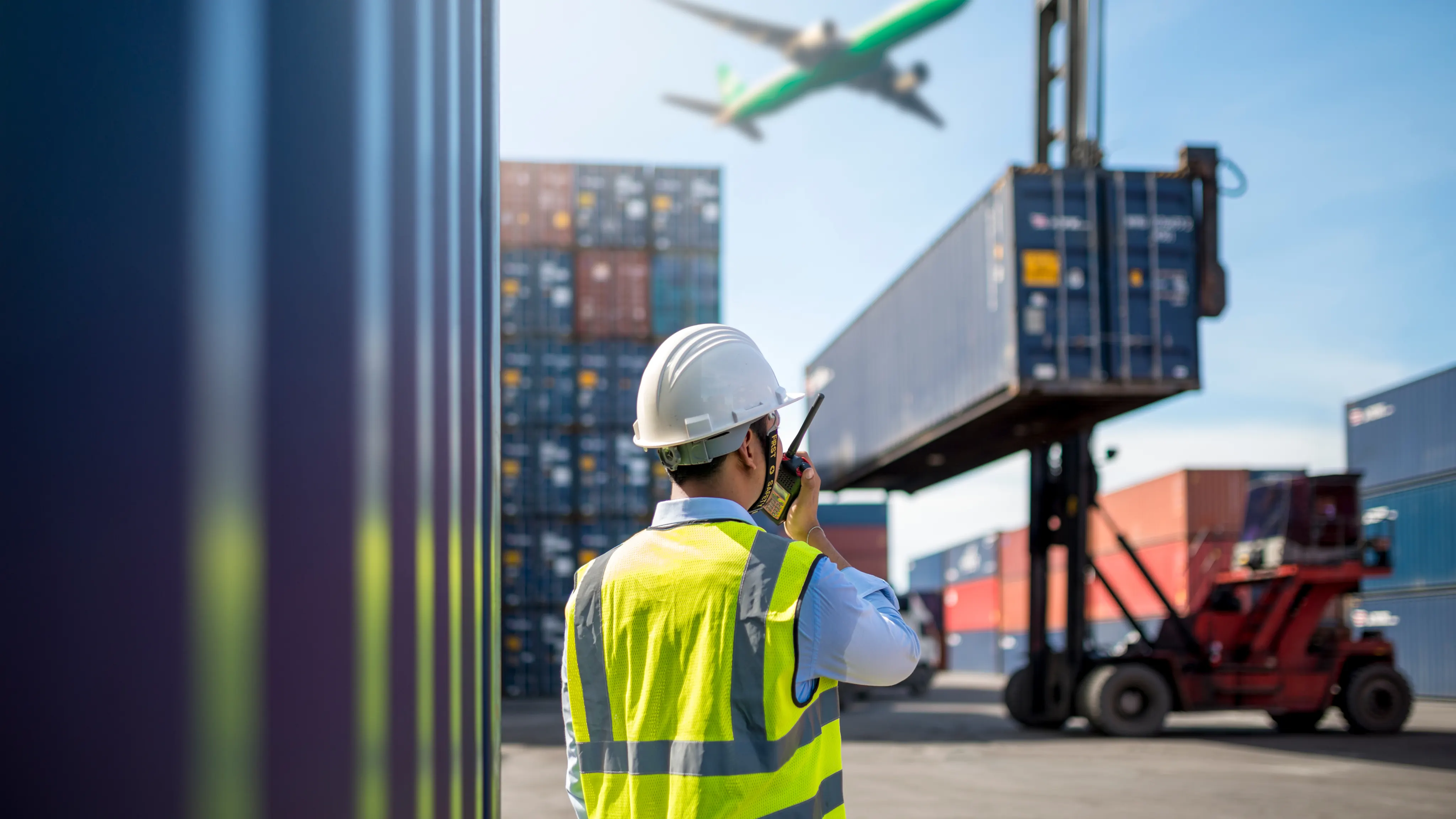
Import from China: logistics guide for companies sourcing from Chinese manufacturers.
For distributors, private labels and industrial companies importing from China that need operational structure at origin: supplier verification, cargo inspection before departure, and international freight coordination.
Why importing from China is more than just coordinating freight.

China holds the largest volume of exportable manufacturing production in the world. For B2B importers such as distributors, private labels, and industrial companies, this represents access to suppliers, product diversity, and price competitiveness. It also entails a chain of operational risks that do not exist in closer source markets.
The geographical distance means that any undetected problem before departure—insufficient packaging, incorrect specifications, poorly drafted documents—will travel for weeks aboard a container. When the issue is detected at the destination port, options are limited and costs are higher.
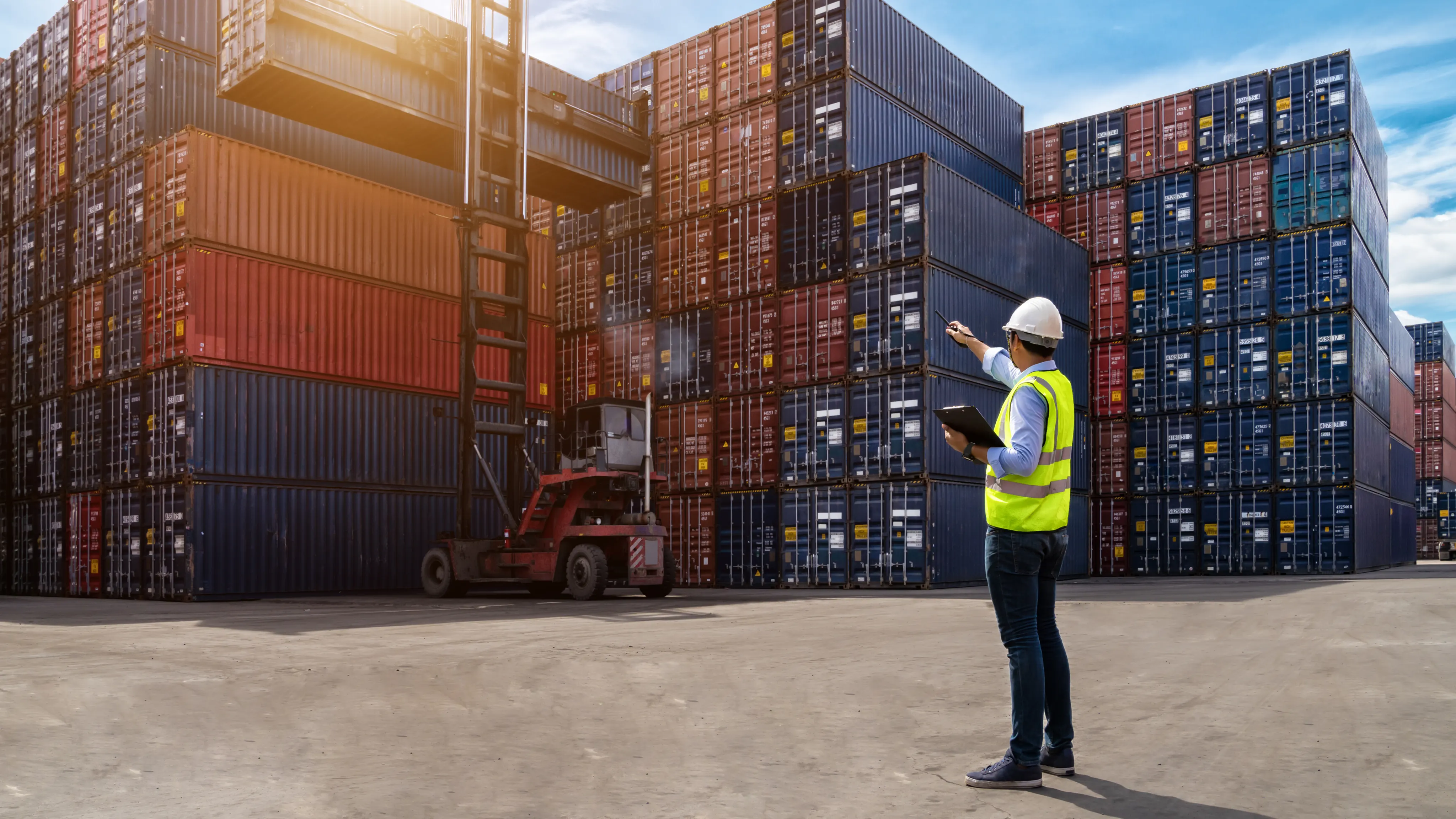
The process of importing from China extends from supplier selection to customs clearance at the destination. Each stage has documentable failure points. Knowing, anticipating, and managing them from the origin is the difference between an efficient operation and a problematic one.
This guide outlines the complete process, the most common risks at each stage, and how a logistics structure based in China reduces the margin of error before the container leaves the export port.
How to import from China: complete process in 8 stages.
Identify a supplier with real production capacity for the required order type. Verification includes confirming the manufacturer's business registration in China, reviewing their export history, and assessing their production facilities. A supplier with good commercial presentation may not have the technical capacity or physical space to produce the agreed order. This stage defines the risk profile of the entire operation.
Establish in writing the product specifications, production timelines, payment terms, and Incoterms of the operation. FOB is the most common for importers who control their own freight. EXW transfers all logistical responsibility from the factory.
The production period is the interval of lowest visibility for the importer operating remotely. Specification mismatches, material substitutions or delays due to component shortages occur during this period. Active follow-up with the supplier — in their language and time zone — allows detecting deviations before they affect the entire batch.
Verify the product before final packaging: compliance with the approved sample, visual defect review, functionality verification. This is the most efficient correction stage — before the supplier closes the order.
The packaging must be suitable for sea transit of 20 to 38 days. The documentation — commercial invoice, packing list, certificate of origin — must be reviewed before closing the container to ensure smooth clearance at the destination.
Physical verification during consolidation before closing the container: counting against the packing list, packaging condition, product compliance, correct labeling, and complete photographic record. This is the last possible intervention point before departure.
Selection of the mode — FCL, LCL, or air — based on volume, timeline, and cargo. Coordination of booking with the shipping line, issuance of the Bill of Lading, and tracking. Sea transit from China: 18 to 38 days depending on port and route.
The customs agent at the destination will manage tariff classification, tax settlement, document verification, and cargo release. Properly prepared documentation in China determines whether the clearance is smooth or causes delays. Freight forwarder in China and customs agent at destination are complementary structures, not alternatives.
Frequent operational risks in China import operations.
Most issues in importing from China are predictable and manageable if identified before departure. Once the container has set sail, correction options are limited and costs significantly higher.
Unverified supplier or insufficient capacity
The supplier confirms capacity during negotiations. Actual verification — visiting facilities, reviewing physical space, checking equipment — is the only way to confirm that capacity exists. Problems arise during production when deadlines and payments have already been committed.
Documentary errors leading to customs hold-ups
Incorrect tariff description, inadequate declared value, or lack of specific documentation. These errors occur in China during document preparation and manifest at the destination when the customs agent attempts to clear the cargo.
Insufficient packaging for international transit
Packaging designed for domestic transport in China may not be suitable for 20 to 38 days at sea, handling during transshipment, and humidity/temperature conditions. Damage is detected at the destination and is difficult to claim without pre-shipment documentation.
Products with incorrect specifications or non-compliant quality
The supplier may interpret specifications differently, use alternative materials during production, or produce variants different from the approved sample. Without pre-shipment inspection, the importer has no visibility into the actual condition of the lot before departure.
Logistical delays and document miscoordination
Congestion at export ports, shipping line closures due to capacity, and itinerary changes are common causes. Miscoordination between export and customs agents can lead to additional delays once the vessel is docked.
Visual summary — risks by stage.
Supplier selection
Supplier without real production capacity
Physical verification of facilities and business registration in China
Production
Unreported material or specification changes
Active monitoring in Mandarin during manufacturing
Packaging
Transit damage due to insufficient packaging
Packaging review during pre-shipment inspection with photographic record
Documentation
Customs errors causing detention at customs
Complete document review before booking by the team in China
Container sealing
Non-compliant product shipped with no possible correction
Physical pre-shipment inspection: counting, conformity, labeling, photo
Frequently asked questions about importing from China.
Direct answers to the most common questions from B2B importers planning sourcing operations from China.
How long does it take to import from China?
What documents are required to import from China?
How do you verify a supplier in China before placing the first order?
What are the main risks when importing from China?
How do you avoid quality problems in orders from China?
How do you organise international shipping from China?
Operational principles for safe imports from China.
A structured import operation from China relies on four conditions that reduce the margin of error throughout the entire chain. Each has its critical point — the moment when a decision defines the outcome of the operation.
Control at origin
Operational presence in China capable of intervening in the chain before departure: verifying the supplier, supervising production, and rejecting a non-compliant batch.
Without control at origin, the importer relies on the goodwill of the supplier to report issues that affect their own interests.
Pre-shipment inspection
Physical verification of the order before the container is sealed: counting, product conformity, packaging condition, and documentation.
Inspection is the only point where errors can be corrected without significant cost. Once departed, no corrections are possible.
Direct logistical coordination
Smooth communication between the operator in China, the supplier, the shipping company, and the customs agent at the destination. No unnecessary intermediaries.
Technical information loses accuracy through intermediaries or automatic translators. In logistics, this loss has documentary consequences.
Active document oversight
Review and preparation of all export documentation before booking: invoice, packing list, certificate of origin, technical.
Documentary errors occur in China. Their consequences manifest at the destination port, when correction is no longer possible in time.
Four services. An operational structure from the origin.
Poly Logistic and Trading manages every stage of the chain from China — not from the destination country. The four pillars can be contracted individually or as an integrated structure depending on the required operational scope.
International Freight Forwarding
Coordination of FCL/LCL sea freight and air freight from all major export ports in China to Spain, Mexico, Colombia, and Latin America.
View solutionLogistics at Origin
Operational supervision in China before departure: coordination with the supplier in Mandarin, consolidation, verification, and document preparation.
View solutionPre-Shipping Inspections
Physical verification of the order before sealing the container: counting, packaging, compliance with the technical sheet, labeling, and complete photographic record.
View solutionBusiness Representation
Permanent presence in China for companies with recurring operations: negotiation with manufacturers, factory visits, production monitoring, and trade shows (Canton Fair, Yiwu).
View solutionOperations by industrial sector.
Textiles and Fashion
Composition certification, REACH labeling, CE requirements for textiles in Europe.
Industrial Machinery
Technical documentation, safety data sheets, conformity certification for equipment.
Retail and Consumer Goods
LCL and FCL volumes, order frequency, labeling by destination market.
Industrial and Components
Heavy loads, technical specification verification, source documentation.
Construction and Materials
Heavy loads, technical specification verification, origin documentation.
Private Label and Own Brand
IP verification, prototype approval, contract manufacturing, brand protection.
Freight forwarding from China by destination market.
Each market has its own operational conditions, tariff frameworks, and documentary requirements. Route pages document the specifics of each operation: ports, transit times, and regulatory authorities.

Spain
Valencia · Barcelona · Algeciras
CE Compliance · DUA

Mexico
Manzanillo · Lázaro Cárdenas · Veracruz
NOM · SAT

Colombia
Buenaventura · Cartagena
DIAN · INVIMA

Costa Rica
Puerto Limón · Caldera
COMEX · SENASA

El Salvador
Port of Acajutla
DGA · MINSAL

Venezuela
La Guaira · Puerto Cabello
SENIAT
Editorial resources for importers.
How to choose a supplier in China
What to check in a pre-shipment inspection
How to structure international shipments from China

Guides for importers: first operations from China

Markets and routes: China to Latin America and Europe
Logistics at origin: what happens in China before departure
Coordinate your next import from China.
Detailed proposal within 24 business hours. Initial evaluation at no charge.